
NDT Reporting Software: How Digital Reporting Improves Inspection Accuracy
Key Takeaways
Non-destructive testing reporting is shifting from manual documentation to fully digital, structured systems that improve both safety and operational efficiency.
- Manual reporting increases errors, delays, and compliance risks in inspection workflows
- Digital NDT reporting software standardizes inspection data and improves traceability
- Cloud-based systems enable real-time access across multiple inspection sites
- AI and LLM-powered tools are improving report generation and defect analysis
- Integrated systems connect inspection, compliance, and maintenance workflows
Table of Contents
- Why NDT Reporting is Becoming Critical
- What is NDT Reporting Software
- Why Manual Reporting Fails Modern Industry Needs
- Core Features of NDT Reporting Software
- Role of Cloud NDT Software Solutions
- AI and LLM in Inspection Reporting
- Weld Inspection Software and Industry Use Cases
- Compliance and Traceability in NDT Systems
- Software Selection Checklist
- Future of Digital NDT Reporting
- Conclusion
Why NDT Reporting is Becoming Critical
Non-Destructive Testing (NDT) is one of the most important safety processes in industries like oil & gas, power generation, construction, and manufacturing.
It ensures structural integrity without damaging the asset, which makes it essential for operational safety.
However, while inspection methods have advanced significantly, reporting systems in many organizations remain outdated.
Most inspection teams still depend on:
- handwritten inspection notes
- spreadsheets for reporting
- delayed documentation workflows
This creates a gap between field inspection and final reporting, which can impact safety decisions and compliance readiness.
What is NDT Reporting Software?
NDT reporting software is a digital system designed to capture, manage, and generate inspection reports in a structured and standardized format.
It replaces manual reporting processes with real-time digital workflows that ensure accuracy and traceability across inspection operations.
In practical terms, it helps organizations:
- digitize inspection data at source
- eliminate manual report preparation
- standardize inspection documentation
- maintain audit-ready records
Modern platforms also fall under broader NDT inspection management software ecosystems that connect field teams, supervisors, and compliance managers in one system.
Industries Using NDT Reporting Software
| Industry | Use Case |
| Oil & Gas | Pipeline and pressure vessel inspections |
| Construction | Structural integrity testing |
| Manufacturing | Weld quality inspection |
| Energy | Equipment safety validation |
| Aerospace | High-precision component testing |
Why Manual NDT Reporting Fails Modern Industry Needs
Traditional reporting methods are no longer sufficient for large-scale industrial operations.
They create inefficiencies that directly affect safety performance and compliance readiness.
Key limitations of manual systems:
- High dependency on manual handwriting and transcription
- Inconsistent inspection formats across teams
- Lack of real-time validation during inspections
- Delayed report submission after fieldwork
- Difficulty in retrieving historical inspection data
These issues become more severe when inspections are conducted across multiple sites or remote locations.
Business Impact of Manual Reporting
| Manual Process | Business Impact |
| Paper-based reporting | Risk of data loss |
| Spreadsheet tracking | Inconsistent records |
| Delayed reporting | Slower decision-making |
| Manual approvals | Increased operational delays |
| Fragmented storage | Poor traceability |
Core Features of NDT Reporting Software
Modern NDT reporting software is built to simplify inspection workflows while improving accuracy and compliance.
Each feature is designed to reduce manual dependency and increase operational efficiency.
1. Digital Inspection Data Capture
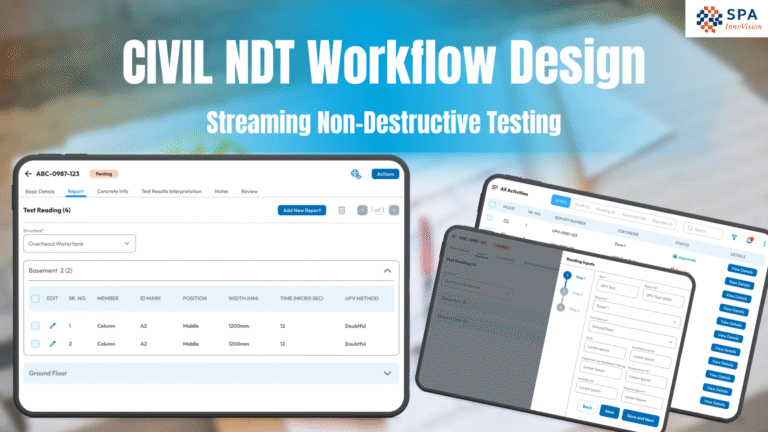
Inspectors can record field data directly into mobile devices or tablets.
This eliminates the need for paper forms and reduces duplication of effort after inspections.
- Real-time data entry during inspection
- Structured input formats
- Reduced human error risk
- Immediate data availability
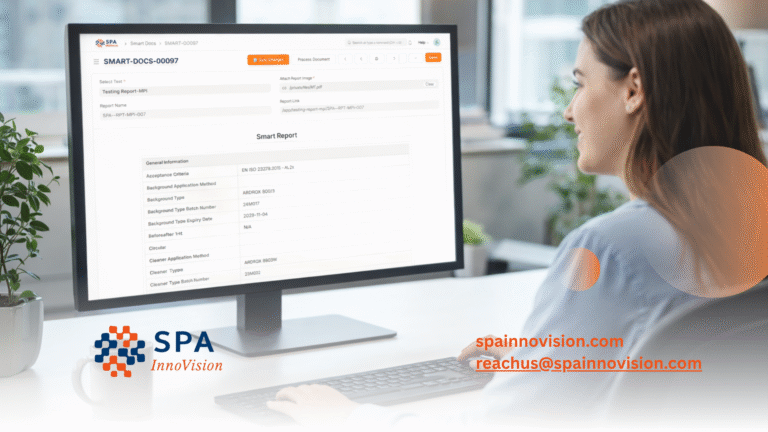
2. Automated Report Generation
One of the most important features of modern systems is automated reporting.
Instead of manually compiling data, reports are generated instantly after inspection completion.
| Manual Reporting | Automated Reporting |
| Hours of formatting | Instant report generation |
| High error risk | Standardized output |
| Delayed submission | Real-time availability |
3. Photo and Evidence Integration
Modern weld inspection software and NDT systems allow inspectors to attach visual evidence directly to reports.
- Photos of defects
- Video documentation
- Voice notes
- GPS-tagged evidence
This improves clarity and reduces misinterpretation during review.
4. Corrective Action Tracking
Reporting is only useful if issues are resolved effectively.
Digital systems convert inspection findings into trackable corrective actions.
- Assign tasks automatically
- Set deadlines for resolution
- Monitor progress in real time
- Ensure accountability across teams
Role of Cloud NDT Software Solutions
Cloud-based systems are now becoming the standard in industrial inspection workflows.
They remove dependency on local systems and enable centralized control across multiple sites.
Key advantages:
- Real-time access to inspection data from anywhere
- Centralized storage of all reports and records
- Secure backup and version control
- Multi-site visibility for management teams
Cloud systems are especially useful for organizations managing large-scale inspection operations.
Why Cloud Matters in Field Inspections
Field inspectors often work in environments with limited connectivity.
Cloud-enabled systems ensure that:
- data syncs automatically when connection is restored
- inspection continuity is not disrupted
- reporting delays are eliminated
AI and LLM in NDT Reporting Software
Artificial Intelligence is now playing a key role in improving inspection reporting workflows.
Modern systems are beginning to integrate AI and LLM-based tools to enhance documentation quality.
How AI Improves NDT Reporting
- Converts raw inspection data into structured reports
- Identifies patterns in defect data
- Provides predictive maintenance insights
- Improves consistency in reporting language
Role of LLMs in Inspection Documentation
Large Language Models help standardize and simplify reporting.
- Auto-generate inspection summaries
- Improve readability of technical reports
- Reduce manual writing workload for engineers
- Ensure consistent compliance language across reports
AI vs Traditional Reporting
| Traditional Reporting | AI-Based Reporting |
| Manual documentation | Automated structuring |
| Human interpretation errors | Data-driven insights |
| Static reports | Intelligent summaries |
Weld Inspection Software Use Cases
Weld inspection is one of the most critical applications of NDT reporting software.
It requires high precision and strict compliance with safety standards.
Common weld inspection use cases:
- pipeline weld testing
- structural steel inspection
- pressure vessel weld validation
- fabrication quality control
Digital systems ensure that every weld inspection is:
- documented consistently
- supported with visual evidence
- traceable across lifecycle stages
Compliance and Traceability in NDT Systems
Compliance is a major requirement in industrial inspection environments.
NDT reporting software ensures that every inspection is properly documented and audit-ready.
Key compliance elements:
- standardized reporting templates
- inspection history tracking
- corrective action documentation
- version-controlled reports
Traceability Structure
| Stage | Data Captured |
| Inspection creation | User + timestamp |
| Field data entry | Measurements + observations |
| Report generation | Automated system logs |
| Approval | Supervisor validation |
Software Selection Checklist
Choosing the right NDT reporting software requires evaluating operational and technical requirements.
| Feature | Importance |
| Mobile inspection support | Field usability |
| Offline capability | Remote operations |
| Automated reporting | Efficiency |
| AI integration | Advanced insights |
| Compliance management | Regulatory readiness |
| Cloud storage | Data security |
| Integration capability | System connectivity |
Future of NDT Reporting Software
The future of inspection reporting is moving toward fully automated and intelligent systems.
Expected developments:
- AI-driven defect detection
- IoT-connected inspection devices
- Real-time predictive maintenance systems
- Fully paperless inspection workflows
Conclusion
NDT reporting is evolving from manual documentation to intelligent digital systems that improve safety, efficiency, and compliance.
Modern NDT reporting software enables organizations to:
- improve inspection accuracy
- ensure traceability across operations
- reduce reporting time
- strengthen compliance readiness
Companies adopting cloud and AI-based inspection systems today are building a long-term advantage in industrial safety and operational efficiency.
Streamline Your Inspection Reporting with SPA InnoVision
Managing inspection data through manual systems often leads to delays, inconsistencies, and compliance challenges.
SPA InnoVision’s digital inspection solutions help organizations streamline NDT reporting workflows, improve traceability, and automate report generation across industrial environments.
From weld inspections to large-scale industrial audits, a connected digital system ensures faster reporting, better visibility, and stronger compliance control across operations.