Lifting Equipment Management Software: Features and Benefits
Key Takeaways
Lifting equipment operations require strict control because even small failures can lead to serious safety incidents. Managing inspections, maintenance, and certifications manually often creates gaps that increase operational risk.
Digital lifting equipment management software brings structure, visibility, and traceability into the entire lifecycle of lifting assets. It reduces human dependency and improves compliance readiness across industries.
- Manual systems increase safety risks and compliance gaps
- Digital platforms improve inspection accuracy and tracking
- Maintenance scheduling prevents unexpected equipment failures
- Certification management ensures regulatory compliance
- Real-time visibility improves operational decision-making
Introduction
Lifting equipment plays a critical role in industries such as construction, oil & gas, shipping, and manufacturing. Every operation depends on equipment like cranes, chains, slings, hooks, and hoists working under strict safety conditions.
Even a minor failure in lifting equipment can result in operational shutdowns, financial loss, or severe safety incidents. Because of this, organizations are required to maintain strict inspection and maintenance routines.
However, many companies still depend on manual systems, which are not built for modern operational complexity. This is where lifting equipment management software becomes essential for structured safety control.
- Supports safe lifting operations
- Reduces operational risks
- Improves inspection consistency
- Enables compliance readiness
Challenges in Lifting Equipment Management
Managing lifting equipment is not just about tracking assets. It involves continuous inspection cycles, maintenance planning, certification control, and compliance reporting across multiple locations.
Most organizations still rely on fragmented tools like spreadsheets and paper records. This creates operational blind spots that become more critical as asset volume increases.
The lack of centralization also leads to inconsistent inspection practices across teams. Different sites often follow different standards, which reduces overall safety performance.
- No centralized asset visibility
- Manual tracking of inspection cycles
- Missing or outdated certification records
- High dependency on human coordination
- Delayed maintenance execution
Operational Impact of Manual Systems
Manual systems do not fail immediately, but they gradually create inefficiencies that impact both safety and productivity. Over time, organizations struggle to maintain consistent inspection quality.
As equipment count increases, manual processes become harder to manage and more error-prone.
- Increased risk of equipment failure
- Poor traceability of inspection history
- Slow compliance audit preparation
- High administrative workload
- Limited real-time decision-making
What is Lifting Equipment Management Software?
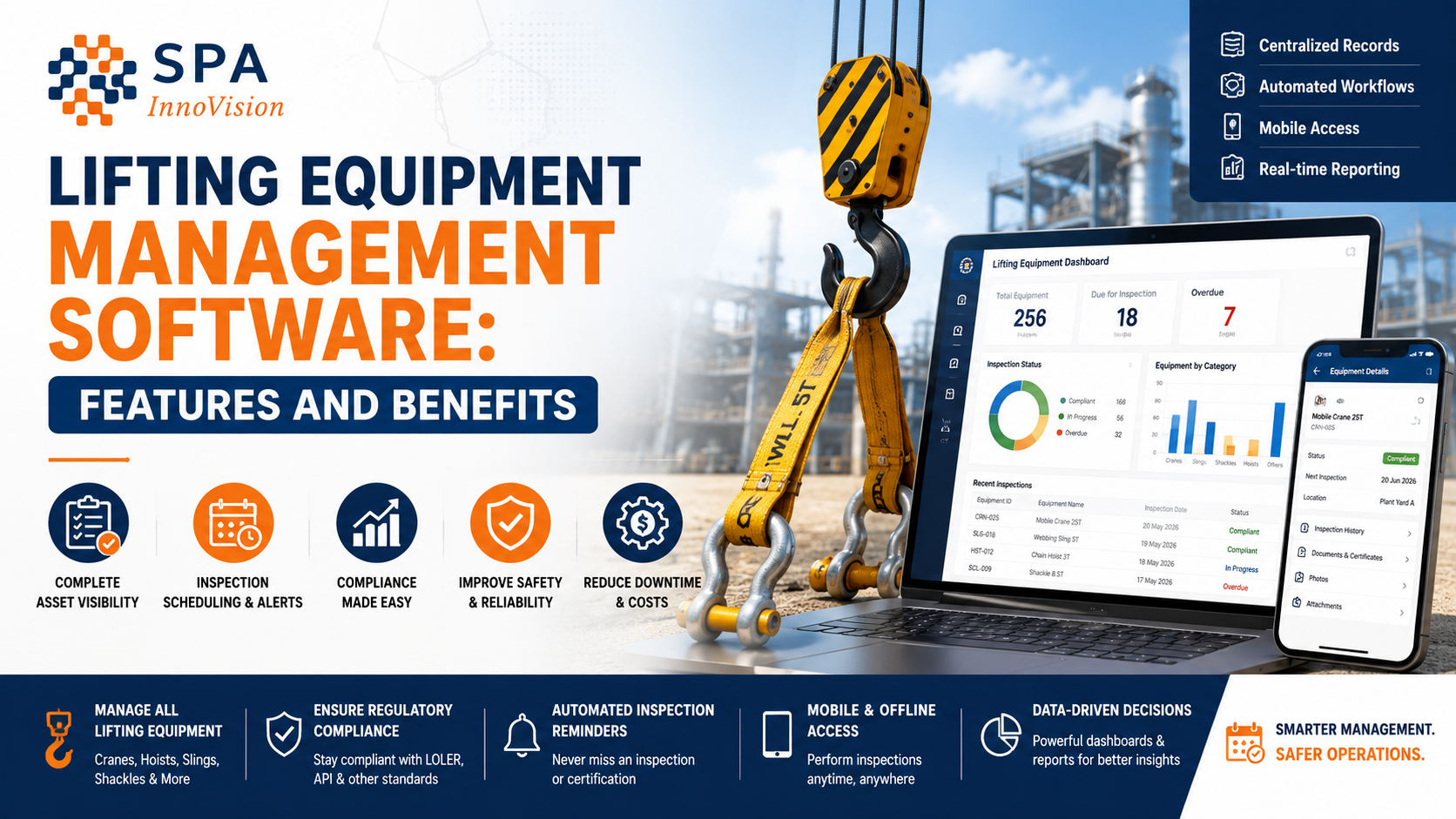
Lifting equipment management software is a digital system designed to manage the complete lifecycle of lifting assets. It covers inspection scheduling, maintenance tracking, certification management, and compliance reporting in a unified platform.
Instead of relying on disconnected tools, organizations can manage everything from a single dashboard. This improves visibility and ensures that no inspection or maintenance activity is missed.
Modern systems also integrate mobile access, allowing field teams to update inspection data in real time.
- Centralized equipment database
- Digital inspection workflows
- Maintenance scheduling automation
- Certification tracking system
- Real-time reporting dashboard
Inspection and Maintenance Workflows
Inspection and maintenance are the backbone of lifting equipment safety. Without structured workflows, equipment condition can deteriorate unnoticed, increasing operational risk.
Digital systems create a controlled workflow where every inspection is scheduled, tracked, and recorded systematically. This ensures that equipment remains compliant and operational at all times.
Each workflow stage is recorded digitally, improving traceability and accountability.
- Inspection scheduling automation
- Field-level digital inspection capture
- Defect identification and logging
- Maintenance task assignment
- Post-repair certification updates
Workflow Structure Table
| Stage | Description | Business Value |
| Inspection | Field asset evaluation | Early fault detection |
| Maintenance | Repair and servicing | Equipment reliability |
| Certification | Compliance validation | Legal readiness |
| Tracking | Lifecycle monitoring | Operational visibility |
Key Features of Lifting Equipment Management Software
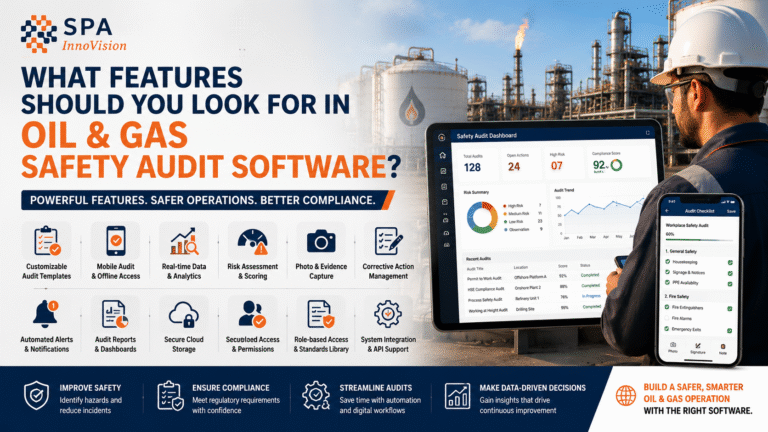
Modern lifting equipment inspection software is built to simplify complex safety operations. It replaces manual processes with structured digital workflows that improve accuracy and reduce delays.
These systems are designed specifically for industrial environments where safety and compliance are critical.
1. Digital Inspection Management
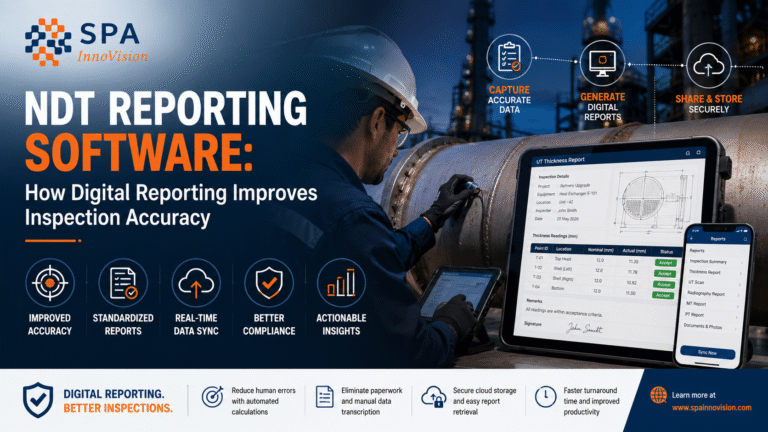
Inspection processes are fully digitized, allowing field teams to capture data directly on mobile devices. This eliminates dependency on paper-based records and reduces reporting delays significantly.
Every inspection follows a structured format to ensure consistency across all sites.
- Mobile-based inspection entry
- Standardized digital checklists
- Real-time defect recording
- Photo and evidence capture
2. Maintenance Scheduling and Tracking
Maintenance is essential to ensure lifting equipment remains safe for continuous use. Without proper scheduling, equipment failures become more likely over time.
Software automates maintenance cycles based on usage, inspection results, or predefined intervals.
- Preventive maintenance scheduling
- Automated reminders for due tasks
- Maintenance history tracking
- Breakdown prevention workflows
3. Asset Lifecycle Management
Every lifting equipment item has a lifecycle that must be tracked from installation to decommissioning. Without proper tracking, organizations lose visibility into equipment condition over time.
Digital systems maintain complete lifecycle history for each asset.
- Equipment registration and tagging
- Usage history tracking
- Inspection and maintenance logs
- End-of-life monitoring
4. Certification and Compliance Control
Certification management is a critical requirement in lifting operations. Expired or missing certifications can lead to serious compliance violations and operational shutdowns.
Digital systems automate certification tracking and renewal alerts.
- Automatic certification tracking
- Expiry notifications
- Compliance documentation storage
- Audit-ready records
5. Mobile and Offline Capability
Lifting operations often take place in remote or challenging environments where connectivity is limited. Without offline capability, inspections can be delayed or incomplete.
Modern systems allow offline data capture that syncs automatically once connectivity is restored.
- Offline inspection support
- Mobile data entry tools
- Automatic synchronization
- Secure local data storage
Compliance Requirements in Lifting Operations
Lifting operations are governed by strict safety regulations that vary across regions and industries. Compliance is not optional—it is a legal requirement that directly impacts operational approval.
Organizations must ensure all lifting equipment is inspected, certified, and documented according to regulatory standards.
- LOLER regulations (lifting operations safety)
- OSHA workplace safety standards
- ISO equipment safety guidelines
- Industry-specific compliance rules
How Software Improves Compliance
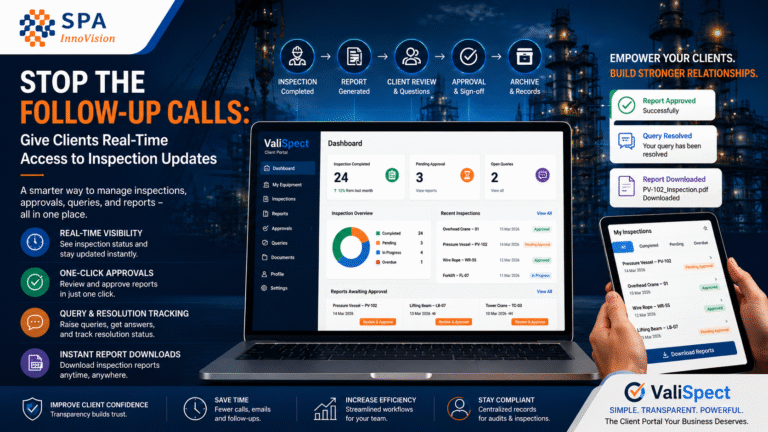
Digital systems simplify compliance management by ensuring that all inspection and certification records are stored in a structured format. This makes audits significantly faster and more reliable.
Compliance becomes continuous rather than reactive.
- Centralized compliance records
- Automated audit reporting
- Certification tracking system
- Inspection history management
Reporting and Certification Management
Reporting is one of the most time-consuming parts of lifting equipment management. Manual reporting often leads to delays and inconsistencies that affect decision-making.
Digital systems automate report generation and ensure that every inspection produces standardized documentation instantly.
- Automated inspection reports
- Standardized certification formats
- Real-time report availability
- Centralized document storage
Certification Benefits Table
| Manual System | Digital System |
| Paper certificates | Digital records |
| Delayed updates | Real-time updates |
| Lost documentation | Secure storage |
| Manual tracking | Automated alerts |
Benefits of Lifting Equipment Management Software
Adopting digital lifting equipment software improves both operational efficiency and safety outcomes. It reduces administrative burden while improving visibility across all assets.
Organizations gain better control over equipment performance and compliance status.
Operational Benefits
- Reduced inspection delays
- Improved maintenance planning
- Better equipment visibility
- Lower administrative workload
Safety Benefits
- Early detection of equipment faults
- Reduced accident risk
- Standardized inspection practices
- Improved hazard control
Compliance Benefits
- Faster audit preparation
- Complete inspection records
- Automated certification tracking
- Reduced regulatory risk
Software Selection Checklist
Choosing the right lifting equipment management software requires evaluating both technical capability and operational suitability. The system should align with real-world industrial workflows.
| Feature | Importance |
| Mobile inspection support | Field usability |
| Offline functionality | Remote site support |
| Maintenance scheduling | Preventive safety |
| Certification tracking | Compliance control |
| Asset lifecycle management | Operational visibility |
| Automated reporting | Efficiency |
| Integration support | System connectivity |
Future of Lifting Equipment Management Software
The future of lifting equipment management is moving toward intelligent automation and predictive safety systems. Organizations will rely more on data-driven decision-making rather than manual inspection cycles.
AI and IoT will play a major role in this transformation.
- Predictive maintenance using AI
- IoT-based equipment monitoring
- Real-time safety alerts
- Fully automated compliance systems
Conclusion
Lifting equipment safety cannot be managed effectively using manual systems alone. As operations scale, the complexity of inspections, maintenance, and compliance increases significantly.
Digital lifting equipment management software provides structure, visibility, and automation across the entire asset lifecycle. It improves safety performance while reducing operational inefficiencies.
Organizations that adopt digital systems early are better positioned for long-term compliance and operational stability.
About SPA InnoVision
Modern lifting operations require more than manual tracking and disconnected systems. A structured digital approach ensures better control over inspections, maintenance, and compliance workflows.
SPA InnoVision provides digital solutions that help organizations streamline lifting equipment inspection processes, improve traceability, and maintain compliance readiness across all operational sites.