Field Inspection vs Equipment Inspection Systems: How NDT Enables Smart Asset Management
Introduction
Modern industries need fast and clear inspection data to run safely and efficiently. Old methods often slow teams down and create gaps in reporting and accuracy. This is why companies now move toward digital inspection systems.
Field inspection software and equipment inspection software serve different roles in this shift. Many businesses confuse them, but they solve separate problems in operations. Understanding this difference helps teams build better inspection workflows.
Field inspection focuses on on-site execution using mobile tools and real-time data capture. Equipment inspection focuses on asset lifecycle, planning, and long-term performance tracking. Both systems work best when used with clear purpose.
Key Takeaways
- Field inspection software enables real-time, on-site inspections using mobile tools, making it ideal for lifting operations and NDT field testing where speed and accuracy are critical
- Equipment inspection software focuses on asset lifecycle management, helping organizations track equipment history, plan inspections, and maintain structured records for better control
- NDT (Non-Destructive Testing) connects both systems by supporting real-time inspection in the field and long-term condition analysis within equipment management systems
- Combining equipment inspection with NDT enables advanced strategies such as residual life assessment and risk-based inspection, improving safety and reducing operational risks
- Modern inspection systems integrate field execution, asset management, and analytics to support predictive maintenance, reduce downtime, and improve decision-making across industries
Understanding Field Inspection Software
A field inspections app allows inspectors to work directly at the job site using mobile devices. They can capture data, take images, and complete checklists without delay. This removes the need for manual entry later.
The system is designed for real-time execution and quick reporting. Data flows instantly into reporting platforms, which gives managers immediate visibility. This helps teams take action without waiting.
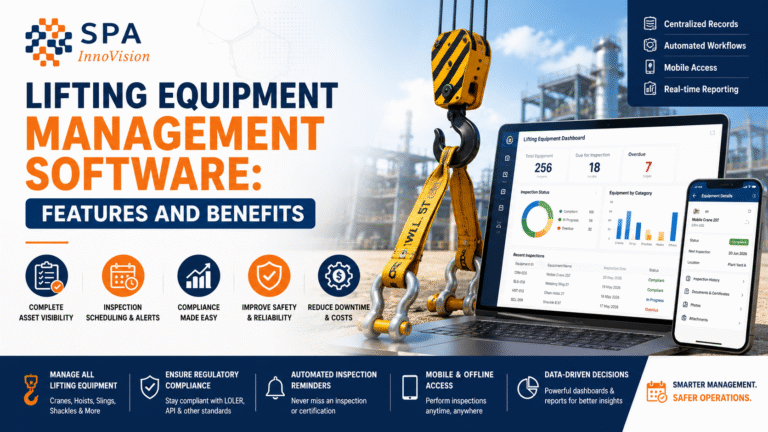
Field inspection software is widely used in lifting operations and NDT field testing. It ensures that inspections happen on time and follow proper procedures. This improves both safety and efficiency.
Key Focus
Field inspection software focuses on real-time data capture and on-site execution. It supports fast reporting and reduces communication gaps between teams. This makes it ideal for dynamic work environments.
It also strengthens NDT and lifting inspection workflows. Teams can complete tasks faster while maintaining accuracy. This improves overall operational performance.
Understanding Equipment Inspection Systems
Equipment inspection software focuses on the equipment rather than the inspection activity. It helps companies manage assets across their entire lifecycle. This includes tracking, planning, and performance monitoring.
The system stores inspection records and maintains complete equipment history. Teams can plan inspections based on usage and condition instead of fixed schedules. This improves maintenance strategies.
When combined with NDT inspection data, the system becomes more powerful. It connects inspection results directly to each asset. This supports better analysis and long-term decision-making.
Role of NDT in Both Systems
NDT plays an important role in both field and equipment inspection systems. It ensures that materials and equipment are tested without damage. This makes it essential for safety and compliance.
In field inspection, NDT supports real-time testing during on-site activities. Inspectors capture results instantly and include them in reports. This allows quick decisions in critical situations.
In equipment inspection, NDT data is stored and analyzed over time. It helps track equipment condition and identify patterns. This supports planning and improves reliability.
Inspection System Comparison
| Feature | Field Inspection Software | Equipment Inspection System | Advanced Integrated System |
| Core Use | On-site inspections | Asset management | Full lifecycle control |
| Focus Area | Lifting + NDT execution | Equipment tracking | Risk + performance |
| Data Capture | Real-time | Stored records | Live + historical |
| Planning | Limited | Strong | Predictive |
| NDT Role | Field testing | Data storage | Full integration |
| Output | Reports | Equipment history | Risk insights + forecasts |
| Decision Making | Fast response | Planned actions | Predictive decisions |
Equipment Inspection + NDT = Smart Management
When equipment inspection software integrates with NDT, it creates a complete data system. Each inspection result links directly to a specific asset. This builds a detailed history over time.
Teams can track wear, damage, and performance trends more accurately. The system uses this data to support better planning and maintenance decisions. This reduces unexpected failures.
Over time, this approach transforms inspection into a strategic function. Companies move from reactive work to data-driven management. This improves both safety and efficiency.
Residual Life Assessment
Residual life assessment helps estimate how long equipment can operate safely. It uses historical inspection and NDT data to calculate remaining life. This supports better replacement planning.
Companies avoid premature replacement and reduce risk of failure. This improves cost control and operational stability. It also supports long-term asset planning.
Risk-Based Inspection (RBI)
Risk-based inspection focuses on identifying high-risk equipment first. It uses data to prioritize inspections based on condition and impact. This ensures critical assets receive more attention.
Teams reduce unnecessary inspections on low-risk equipment. This saves time and resources while improving safety. It creates a more efficient inspection strategy.
Benefits of Equipment Inspection Systems
Equipment inspection systems improve planning by using real data instead of assumptions. Teams can schedule inspections based on equipment condition and usage. This leads to better maintenance outcomes.
Safety improves because systems track risk and identify potential failures early. Teams can act before problems become serious. This reduces accidents and downtime.
The system also provides full visibility into equipment performance. Managers can access data at any time and make informed decisions. This improves control across operations.
Future of Inspection Systems
Inspection systems will continue to evolve with automation and data analytics. Companies will rely more on predictive tools to prevent failures. This will reduce downtime and improve efficiency.
Integrated platforms will combine inspection, NDT, and asset management in one system. This will remove data silos and improve collaboration. Teams will work with more accurate and complete information.
The future will shift from inspection as a task to inspection as a strategy. Companies will focus on prediction, planning, and performance. This will create smarter industrial operations.
Conclusion
Field inspection software and equipment inspection systems solve different problems in modern industries. Field inspection focuses on on-site execution and real-time data capture. Equipment inspection focuses on asset management and long-term planning.
When combined with NDT, equipment systems provide deeper insights into performance and risk. This enables advanced practices like residual life assessment and risk-based inspection. These capabilities improve both safety and efficiency.
SPA InnoVision supports this transformation with digital platforms designed for inspection and testing industries. These solutions help companies reduce risk, improve accuracy, and build scalable systems for the future.