SPAVault Web App: Designing an Upgraded CX for Complex Industries
For a very long time, we treated our products – InspectO, ValiSpect, WeldTrack, AccuMatlab as a powerful but separate entities. Each solved a specific problem for a different TIC very well. But over time, a bigger pattern started to emerge. Our users weren’t just ones product. They were shuffling through multiple apps, login, interfaces and disconnected workflows and honestly it wasn’t a good experience.
The Real Problem Wasn’t Features. It Was Experience.
When we started talking to our users – inspection engineers, technicians, supervisors, QA Teams – we realized something important:
“ They didn’t want more tools-They wanted less friction.”
Most of them are not tech-savvy. Many still rely on paper-based systems, spreadsheets, etc. Their daily work involved moving between field inspections, reporting, compliance checks, and approvals, often under time pressure.
There issues are consistently the same as below :
- Too many systems to manage
- Complex and inconsistent UI
- Slow, manual reporting processes
- High chances of errors and data loss
- Poor Visibility across teams
This is not just a usability issue, it was a CX gap.
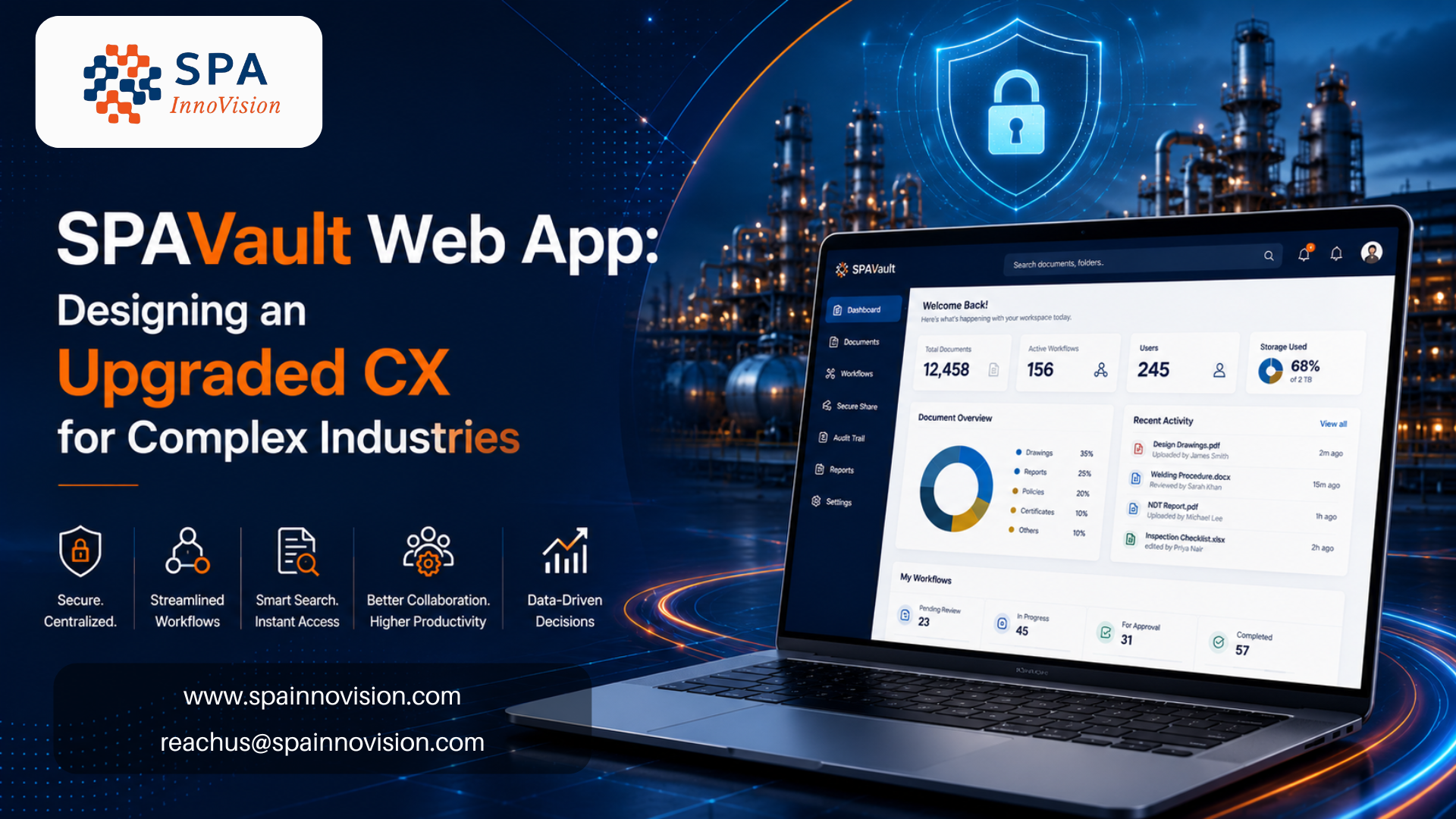
Enter SPAVault: One Platform, One Experience
SPAVault wasn’t just an idea to “combine apps” it is a decision to rethink and restructure the entire experience from the scratch. Our vision is to make a unified ecosystem for NDT, TIC and other testing and inspections companies. Single login, consistent interface and connected workflow. But more importantly, a system that feels simple, even when the processes are not.
Designing for Real Users (Not Ideal Ones)
Before going directly in the design, we slowed down and did the groundwork:
- Conducted user interviews with existing customers
- Mapped real-world workflows
- Identified friction points across modules
- Performed competitive analysis
Surprisingly, while there were tools in the market, none truly focused on bringing everything under one roof with a strong UX foundation.
Most solutions were either:
- Too technical
- Too fragmented
- Or simply not designed for field users
That became our edge: CX-first thinking in a traditionally system-heavy industry.
Breaking Down Complexity into Modules
Instead of overwhelming users, we structured SPAVault into clear, purpose-driven modules:
- InspectO
An end-to-end NDT inspection workflow platform—covering everything from work orders and project planning to execution and reporting. The goal here was visibility and control across the inspection lifecycle.
- ValiSpect
A specialized solution for lifting inspections aligned with LEEA and ASME standards. Here, the focus was compliance made simple, reducing cognitive load during critical inspections.
- AccuMatlab
A LIMS platform designed for labs to automate workflows, manage data, and generate reports efficiently. The UX challenge was handling data-heavy environments without overwhelming users.
- WeldTrack
Built for tracking welder qualifications and certifications. We focused on clarity and traceability, ensuring users can quickly access critical information without digging through records.
- HR Module
Because operations don’t run without people. Leaves, attendance, and timesheets were integrated to ensure organizational alignment within the same ecosystem.
Role-Based Experience: Designing for Context
One of the key UX decisions was implementing role-based interfaces:
- Admin
- Supervisor
- Technician
- Reviewer
Each role sees only what they need.
This reduces clutter, improves decision-making speed, and minimizes errors—especially for users who aren’t comfortable navigating complex systems.
Designing for the Field: Offline First Thinking
A big reality check came from field visits.
Technicians often work in remote areas with no internet connectivity.
So we asked ourselves:
What’s the point of a “smart system” if it fails in the real world?
That led to one of the most critical features:
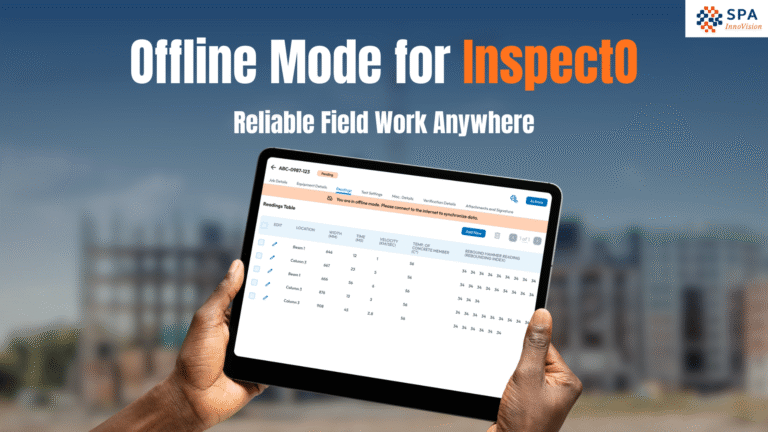
- Tablet-friendly interface
- Offline data entry
- Auto-sync when connectivity is restored
This wasn’t just a feature—it was a CX necessity.
Speed vs Quality: Designing Under Constraints
We had a tight timeline.
So instead of starting from scratch, we leveraged our existing design system—SPA Ambibuzz:
- Predefined typography
- Consistent color system
- Standardized components
- Scalable UI patterns
This helped us move fast without compromising consistency.
To accelerate further, we integrated AI tools like:
- Google Stitch
- Codex
These helped us quickly translate ideas into working prototypes, which we refined in Figma for final design precision.
The goal was simple:
Reduce the gap between design and development.
The Core Philosophy: Simplify the Complex
SPAVault is not just about combining features.
It’s about:
- Reducing cognitive load
- Creating intuitive navigation
- Designing for real-world usage
- Making complex workflows feel manageable
Because in industries like NDT and inspection, the software should support the user—not slow them down.
What’s Next?
As I write this, SPAVault is in development and gearing up for launch soon.
But for me, this project goes beyond just shipping a product.
It’s about proving that:
Even in highly technical, process-heavy industries—great UX can be a differentiator.
And sometimes, the biggest innovation isn’t adding something new.
It’s making everything work together, seamlessly.